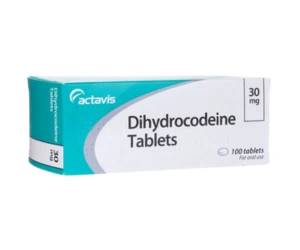
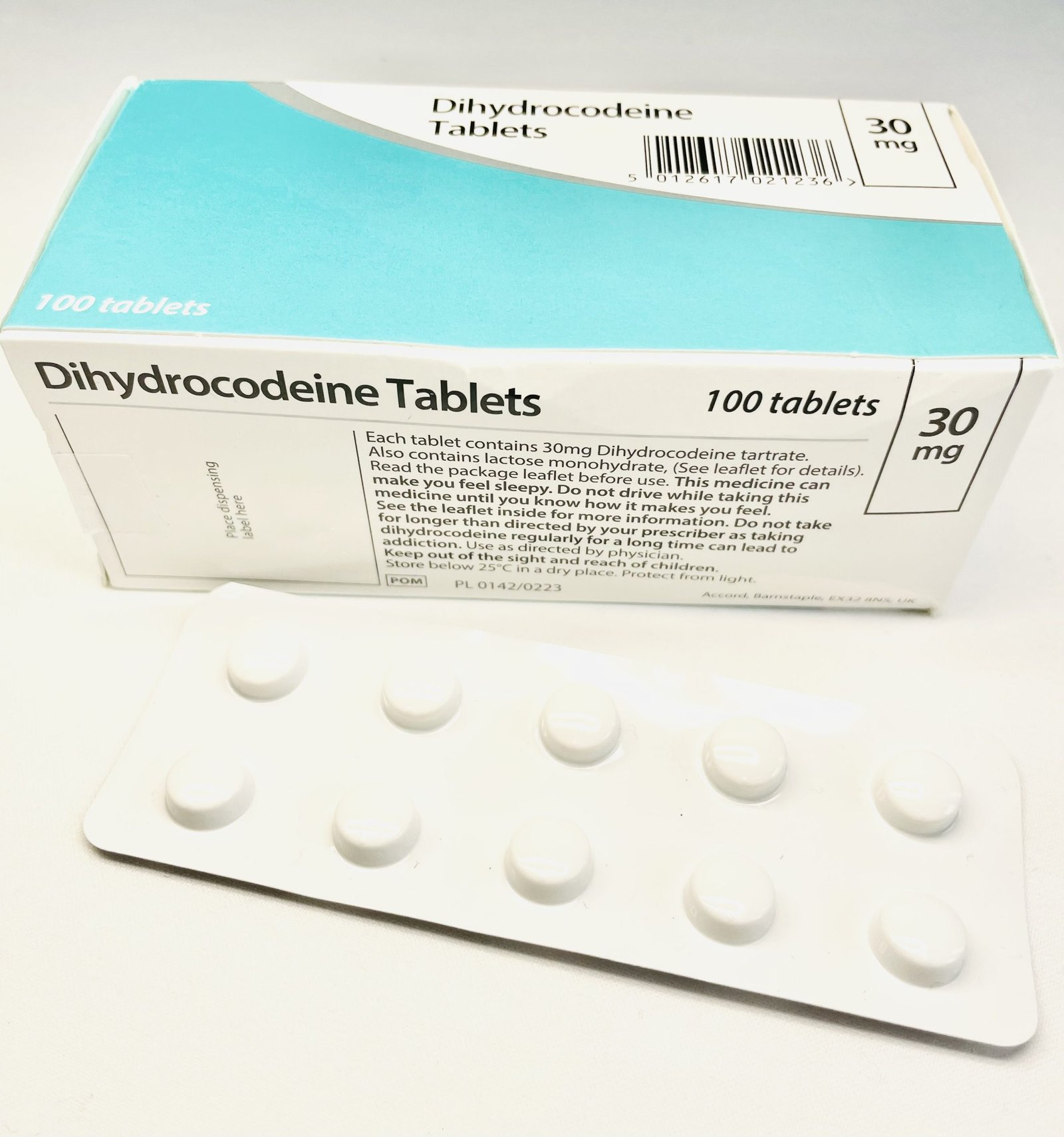
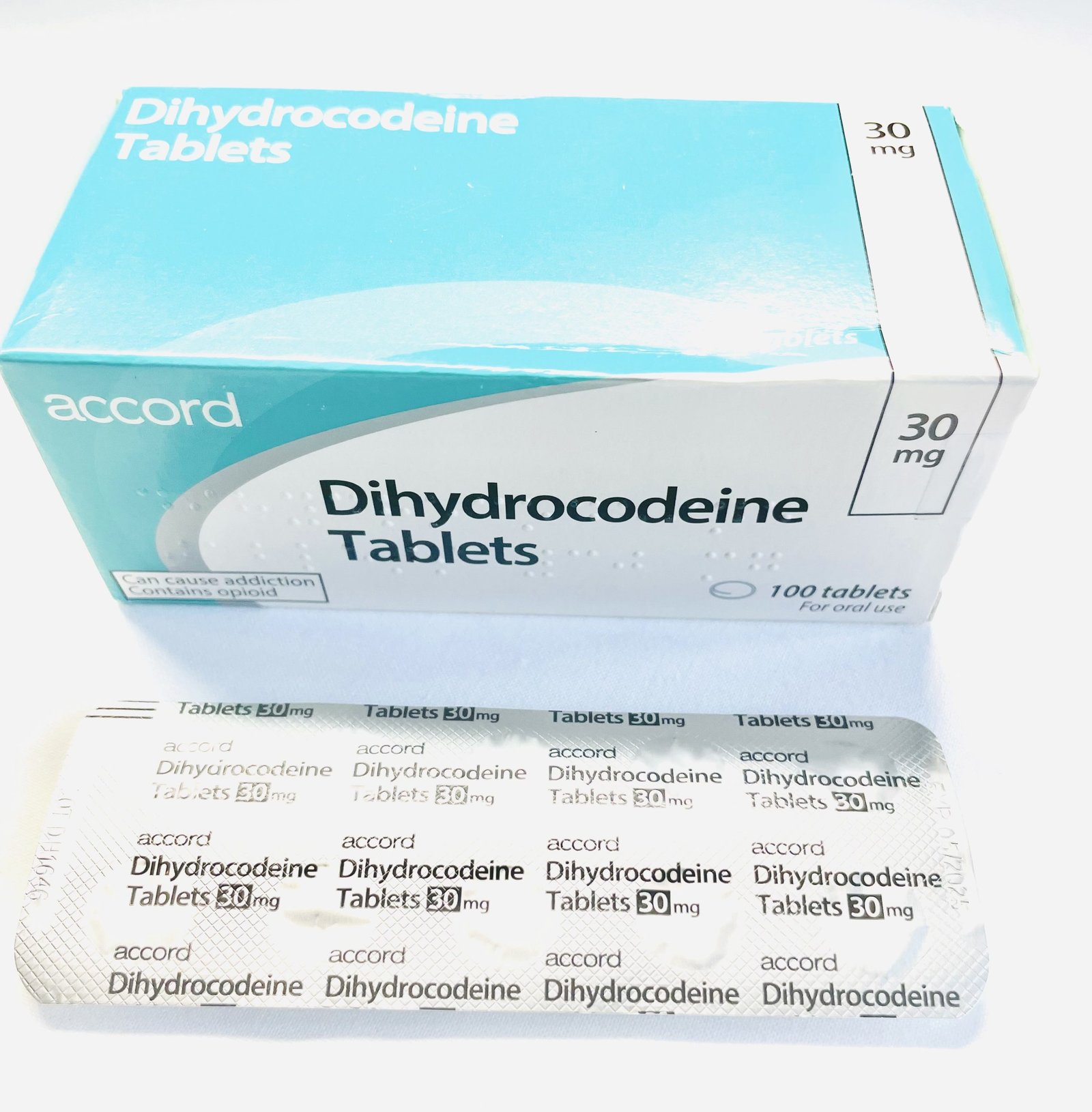
Description
Dihydrocodeine 30mg: Uses, Dosage, Side Effects, Safety and Purchase Online in UK
Dihydrocodeine is a semi-synthetic opioid analgesic — a painkiller derived by chemically modifying codeine. It belongs to the same broad family as codeine, morphine and oxycodone, and is used for moderate to severe pain that has not responded adequately to non-opioid painkillers such as paracetamol or ibuprofen.
The active ingredient in most UK products is dihydrocodeine tartrate. You may encounter it under several names and formulations, including plain dihydrocodeine tablets, DHC Continus (a modified-release tablet), and DF118 Forte (a higher-strength tablet). It is also available as an oral liquid and, in hospital settings, as an injection. Its Anatomical Therapeutic Chemical (ATC) classification is N02AA08, placing it firmly within the opioid analgesics.
How Does Dihydrocodeine Tablets 30 mg Work?
The nervous system carries pain signals from the site of an injury or illness to the brain, where they are perceived as pain. This pathway is disrupted by dihydrocodeine.
After being absorbed, dihydrocodeine (as well as its active metabolites) attaches itself to opioid receptors located throughout the central nervous system, including the brain and spinal cord. These receptors are primarily mu (μ) opioid receptors. It modifies how the brain perceives and reacts to pain by activating these receptors, which also reduces the transmission of pain signals. Analgesia is the outcome; although pain persists, it is perceived as less severe and uncomfortable.
Many of the adverse effects of dihydrocodeine are explained by the same mechanism, since opioid receptors also affect other physiological processes. Its potential to cause dependence and addiction is underpinned by activity in reward-related brain circuits, receptors in the gut slow bowel movement (causing constipation), and receptors in the brainstem affect breathing (hence the risk of respiratory depression in overdose).
Dihydrocodeine is considered a relatively weak-to-moderate opioid compared with morphine, which is one reason it is often chosen for pain that is beyond the reach of simple analgesics but does not yet warrant a strong opioid.
Medical Uses and Pain Conditions of 30mg Dihydrocodeine Pills
For moderate to severe pain, dihydrocodeine is usually prescribed after less potent analgesics have not worked. The medication is typically prescribed for the shortest effective duration, especially for short-term (acute) pain, after a prescriber balances the potential benefit against the risks for each patient.Common clinical contexts include:
Acute and post-operative pain
After surgery or a significant injury, dihydrocodeine may be used for a limited period to control pain during recovery. Here the emphasis is on short-term use, with the dose stepped down as healing progresses.
Musculoskeletal and injury-related pain
It may be used for pain from fractures, soft-tissue injuries and other musculoskeletal conditions where non-opioid options are inadequate.
Chronic and cancer-related pain
For longer-term pain — including pain associated with cancer — modified-release formulations may be used to provide more sustained relief. Long-term opioid use for chronic non-cancer pain is approached cautiously, in line with NICE guidance, because the evidence for lasting benefit is limited and the risks of dependence accumulate over time.
Other pain types
In practice dihydrocodeine is sometimes considered for back pain, arthritis (osteoarthritis), dental pain, neuralgia (nerve pain), sciatica and severe pain that other treatments have not eased. Two important caveats: for nerve pain (such as neuralgia or sciatica), opioids are often less effective than medicines designed for neuropathic pain, and specific guidance (for example, NICE recommendations on headache and migraine) generally advises against using opioids for migraine, because they are ineffective for many people and can worsen headaches over time. Whether dihydrocodeine is appropriate for any of these conditions is a decision for a qualified prescriber based on the individual’s full clinical picture.
Effectiveness: What to Expect
When used properly, dihydrocodeine effectively relieves the kinds of pain mentioned above. Standard (immediate-release) tablets are usually taken multiple times a day because the pain relief usually starts within 30 minutes to an hour and lasts for four to six hours. Often chosen for persistent pain, modified-release (slow-release) tablets release the medication gradually and are taken approximately every 12 hours to provide steadier, longer-lasting control.
Because people metabolize opioids differently and dihydrocodeine depends on the body’s enzymes to transform it into its active forms, effectiveness varies among individuals. Talking to the prescriber is the better course of action if pain is not sufficiently managed at the recommended dosage.Dosage and Administration
Dosing must always be set by a prescriber and detailed on the label and patient information leaflet. The figures below reflect standard UK guidance (NHS/BNF) and are provided for general understanding only.
Standard (immediate-release) tablets — adults and children aged 12 and over:
- 30 mg tablets:usually one tablet every 4–6 hours when needed, up to a maximum of six tablets (180 mg) in 24 hours.
- 40 mg tablets:usually one or two tablets up to three times a day, up to a maximum of six tablets (240 mg) in 24 hours.
Modified-release (slow-release) tablets (e.g., 30 mg, 60 mg): usually one tablet every 12 hours, with the 24-hour maximum depending on the strength.
Children: dihydrocodeine is used in children only under specialist guidance; many preparations are not licensed for younger children, and doses for those aged 1–11 are calculated by body weight.
How to take it:
swallow tablets whole with water, ideally with or after food to reduce stomach upset. Do not crush or chew modified-release tablets — this can release the whole dose at once and cause a dangerous overdose. If a dose is missed, take it when remembered unless the next dose is near; never double up.
Lower doses are often appropriate for older or frail patients and those with liver or kidney problems, and dihydrocodeine is generally used short-term for acute pain, with a clear plan for stopping.
Dihydrocodeine Tablets Side Effects and Warnings
Opioid side effects should be taken as seriously as the benefits. Some are common and often ease with time; others are signs of an emergency.
Very common or common effects include constipation (very common — ask your pharmacist about managing it), drowsiness, dizziness, nausea and vomiting, dry mouth, headache and confusion. Drowsiness and blurred vision can impair driving and operating machinery — it is an offence to drive if impaired, so seek advice before driving on this medicine.
Serious effects requiring urgent medical attention include difficulty breathing or shallow, slow breathing (respiratory depression), severe drowsiness or difficulty waking, a very slow or irregular heartbeat, seizures, and signs of a serious allergic reaction (swelling of the face or throat, difficulty breathing, a severe rash). These require emergency help — call 999.
Dependence, Addiction and Withdrawal
This is central to using dihydrocodeine safely and must not be minimised. Like all opioids, dihydrocodeine can cause:
- Tolerance— over time the same dose may produce less effect.
- Physical dependence— the body adapts to the medicine, so stopping suddenly triggers withdrawal. This can happen even when the medicine is taken exactly as prescribed and is not the same as addiction.
- Addiction (dependence with harmful, compulsive use)— a smaller but serious risk, higher with longer use, higher doses, and in people with a history of substance misuse.
Withdrawal symptoms can include yawning, sneezing, a runny nose, sweating, chills, muscle aches and twitching, stomach cramps, nausea, diarrhoea, restlessness, anxiety, irritability and difficulty sleeping. To avoid this, dihydrocodeine should never be stopped abruptly after regular use — the dose should be reduced gradually under medical supervision. If you think you have become dependent, this is a medical issue to raise with your prescriber, not a source of shame.
Frequently Asked Questions
Is dihydrocodeine available in the UK without a prescription?
No. A valid prescription following a proper clinical assessment is required from any legitimate source, including registered online pharmacies. Anywhere offering it without a prescription is acting illegally and unsafely.
How long does dihydrocodeine take to work?
For standard tablets, pain relief typically begins within about 30–60 minutes and lasts around 4–6 hours. Slow-release tablets act more gradually and last about 12 hours.
What is the usual adult dose? For 30 mg standard tablets, a common regimen is one tablet every 4–6 hours as needed, up to a maximum of six tablets (180 mg) in 24 hours — but your prescriber sets your dose, which may be lower. Always follow your label.
Is dihydrocodeine suitable for arthritis or back pain?
It is sometimes prescribed for severe osteoarthritis or back pain when other painkillers haven't worked, but this is decided case by case. For long-term conditions, non-opioid and non-drug approaches are usually preferred first, and opioids are used cautiously because of dependence risks.
Does it work for nerve pain, sciatica or migraine?
Opioids are often less effective for nerve pain (like neuralgia or sciatica) than medicines designed for it, and current guidance generally advises against opioids for migraine. Discuss the best option for these conditions with your prescriber.
Where to Order Dihydrocodeine 30mg Online in UK?
Some trusted and reliable online pharmacies like Trust Meds UK are selling Dihydrocodeine online in UK for convince and ease of customer.
Can I drink alcohol while taking it?
Alcohol increases drowsiness and the risk of dangerously slowed breathing. It's best avoided.
How do I stop taking it safely?
Don't stop suddenly after regular use, as this can cause withdrawal. Ask your prescriber to help you reduce the dose gradually.
What should I do in a suspected overdose?
Call 999 immediately. Signs include pinpoint pupils, extreme sleepiness or unresponsiveness, and slow or stopped breathing. Opioid overdose can be reversed with naloxone.


Reviews
There are no reviews yet.